
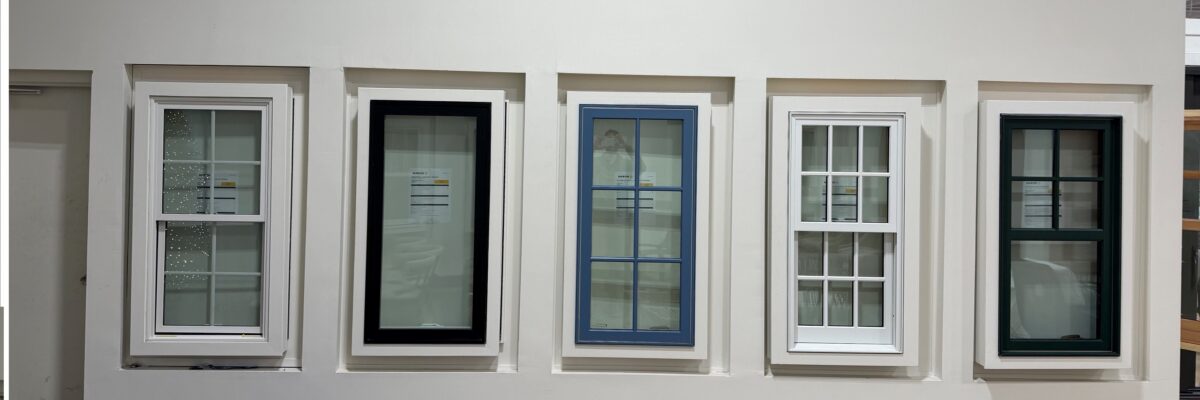
Walk down almost any street from Clayton to Kirkwood to Chesterfield and you’ll pass five or six different kinds of window before the corner. Most homeowners can point to them but can’t name them, and that makes the first talk about replacement windows harder than it needs to be. Learn the names and the rest of the choice gets a lot easier.
The main types of windows are double-hung and single-hung, casement, awning, sliding, picture, bay and bow, and specialty shapes. What separates them is how the window opens, or whether it opens at all. Hung windows slide up and down, casements swing out from the side, awnings tilt out from the bottom, sliding windows glide sideways, and picture windows stay fixed. Each style trades something, whether that’s airflow, views, cleaning or space.
How the Window Types Compare at a Glance
The quickest way to tell window types apart is by the way the sash moves. The sash is the part of the window that holds the glass and moves when you open it. This table puts the common styles side by side:
| Type of window | How it opens | Best rooms and areas | Main trade-off |
| Double-hung | Both sashes slide up and down | Bedrooms, living rooms, traditional homes | Only about half the window opens at once |
| Single-hung | Only the bottom sash slides up | Secondary rooms, simpler openings | Top sash is fixed, so less control over airflow |
| Casement | Hinged at the side, cranks outward | Kitchens, over sinks, hard-to-reach spots | The open sash swings into the yard or walkway |
| Awning | Hinged at the top, tilts out from the bottom | Bathrooms, basements, above other windows | The open sash projects outward |
| Sliding (glider) | One sash slides side to side | Wide, low openings, next to patios and walkways | Only half the window opens |
| Picture (fixed) | Doesn’t open | Living rooms, views, stairways | No ventilation |
| Bay and bow | Project out from the wall, usually with operable side units | Living rooms, dining rooms, breakfast nooks | More structure and more cost |
| Specialty shapes | Usually fixed | Above doors, gables, accent spots | Mostly decorative, little or no airflow |
Every style below comes with a Marvin example. Forshaw of St. Louis is a Marvin windows dealer in St. Louis, so those are the windows we can show you working. If you’re still deciding whether the brand fits, our review asks are Marvin windows worth it.
Double-Hung and Single-Hung Windows
Double-hung windows have two sashes that both slide up and down in the frame. Lower the top sash and raise the bottom one, allowing warm air to escape at the top while cooler air comes in at the bottom. On many double-hung windows both sashes also tilt in, so you can clean the outside glass from inside the house. That matters on a second floor.
Single-hung windows look the same from the curb. The difference is that only the bottom sash moves and the top one stays fixed. They’re a simpler window with fewer options for airflow.
The trade-off with both is the opening. Because one sash slides over the other, only about half the window is ever open. That’s fine for fresh air but matters for a bedroom window that has to double as an emergency exit, which we cover below.
Double-hung windows suit traditional homes, and that describes a lot of the brick houses across St. Louis. Marvin makes double hung windows in both Elevate and Ultimate. Elevate pairs an Ultrex fiberglass exterior with a pine interior, which gives you wood inside and a tough shell outside.
Casement Windows
Casement windows are hinged on one side and crank outward like a door. The whole sash opens, so you get the full width of the window for fresh air, and an open casement can catch a breeze moving along the side of the house and steer it inside.
Casements are a common pick over a kitchen sink, where you can’t comfortably push a sash up, because a crank is easy to reach. They’re also known for sealing well. When a casement closes, the sash presses against the weatherstripping around the frame, and casements generally seal tighter than double-hung or sliding windows for that reason. In a St. Louis summer, with the air conditioner running hard, that tighter seal helps.
The trade-off is where the sash goes. An open casement swings into the yard, a deck or a walkway, so it’s a poor fit next to a path people walk on.
Marvin offers casement windows in Elevate and in Vivid, Marvin’s newest collection, which has an Ultrex fiberglass exterior. Ultimate’s list of styles also includes push-out windows, for people who would rather push a sash open by hand than turn a crank.
Awning Windows
Awning windows are hinged at the top and open outward from the bottom. The open sash sheds rain like a small roof, so you can leave an awning window cracked during a summer storm and still get air without water coming in.
That makes awning windows a good fit for bathrooms, basements and laundry rooms. They’re also often set high on a wall, or stacked above or below a larger window, adding ventilation where a fixed pane would give you none. Set high, they keep privacy and still let natural light in.
Like a casement, the open sash projects outward, so watch where it lands on a patio or walkway. Marvin offers awning windows in Elevate and in Vivid.
Sliding Windows
Sliding windows, which Marvin calls gliders, have a sash that slides side to side along a track. Nothing swings in or out, and that’s the main reason people choose them.
Sliding windows work best in wide, short openings: a basement wall, a spot above a kitchen counter, or a room that opens onto a deck or a walkway where a swinging sash would be in the way. They’re simple to operate, with no crank to turn.
The trade-off matches the double-hung’s. Only one side opens at a time, so you get about half the window’s area for air. Most of the sliding windows sold today are vinyl. Forshaw doesn’t carry vinyl, and the slider we offer is the Elevate glider, with the same Ultrex fiberglass exterior and pine interior as the rest of that collection.
Picture Windows
Picture windows are fixed panes of glass that don’t open. They exist for views and natural light, and with no sash to frame, the glass can be larger and the frame slimmer than on an operable window of the same size.
Because nothing opens, picture windows provide no ventilation. That’s why you’ll so often see one flanked by a casement on each side. The picture window carries the view and the casements bring in the air, and the three read as one design from inside the room.
Marvin calls its fixed windows direct glaze, and you’ll find them in Elevate and Vivid.
Big glass with thin frames is where window design is heading. In one 2026 industry survey of window professionals, 71% named black as the frame color homeowners prefer most, and 63% pointed to slim sightlines. Picture windows are where both trends show the most.
Bay and Bow Windows
Bay and bow windows project out from the wall of the house instead of sitting flat in it. A bay is usually a large center window with an angled window on each side. A bow is a gentler curve made of several windows of the same size.
Either one adds space to a room. The projection creates a ledge or a window seat, pulls in light from three directions and widens the view. In a living room, a dining room or a breakfast nook, a bay window can become the spot everyone sits.
The trade-off is structure and cost. A window that sticks out from the wall needs more framing and support around it, so bay windows and bow windows take more work to install than a flat window in the same spot. Marvin offers bay and bow windows in its Elevate collection.
Specialty Shapes
Specialty shape windows are the accents: half-rounds above a front door, triangles in a gable, circles and other shapes that follow a roofline. Most are fixed and decorative, there to add light and character rather than airflow.
They’re also where a house’s design shows. A half-round over a pair of double-hung windows reads as traditional, while a run of trapezoids under a sloped ceiling reads as modern. Marvin offers specialty shapes in Ultimate, Elevate and Vivid, so a shaped window can match the line you choose for the rest of the house.
How to Choose the Right Window Type for Each Room
The right choice usually comes down to the room, the opening and the look of your house, not one favorite style for every wall. Most homes end up with three or four window types, and that’s normal. Frame material is a separate decision from style, so it helps to see how fiberglass and vinyl windows compare, how long each material lasts in window lifespans compared, and what aluminum-clad wood windows offer.
Consider each room on its own:
- Kitchen: A casement or awning over the sink is easier to open than a sash you have to lift across a counter.
- Bedrooms: Double-hung and casement windows are both common. At least one window has to work as an emergency exit.
- Bathrooms: An awning set high gives you air and privacy, and it can stay open in the rain.
- Living room: A picture window for the view, often with casements on either side for ventilation, or a bay if you want the seat.
- Basement and patio walls: Sliding windows or awnings, where nothing should swing into a walkway.
The Bedroom Egress Rule
Every bedroom needs at least one window that opens wide enough for a person to climb out in an emergency. Most U.S. codes follow the International Residential Code. That code calls for a net clear opening of at least 5.7 square feet, or 5.0 square feet on a ground floor. The opening must be at least 24 inches high and 20 inches wide, with the sill no more than 44 inches above the floor, and it must open without keys or tools.
The two minimums alone don’t add up to enough space. A 20 by 24 inch opening is only 3.33 square feet, so a window built to both minimums still falls short. This is where window type matters. A casement opens nearly its full width, so it can meet the rule in a smaller frame, while a double-hung or slider opens only half its area and has to be larger. Check the code your town has adopted before you settle on a bedroom window, since local rules can differ.
Energy Efficiency and the Label
Every window type can be energy efficient, but the label tells you how well a given window performs. ENERGY STAR points homeowners to two ratings from the NFRC label. U-factor measures how much heat escapes, and lower is better for cold St. Louis winters. Solar heat gain coefficient, or SHGC, measures how much of the sun’s heat comes through the glass, and a lower number helps keep a room cooler in summer.
Style plays a part too. A casement’s compression seal generally keeps air out better than a sash that slides, so in a drafty room, consider a casement alongside a double-hung.
Combining Window Types
The best-looking windows in a house are often two or three window types working together. A picture window with casements on each side, a row of awnings under a large fixed pane, or a half-round over a pair of double-hung windows all combine views, air and design in one opening. Combinations also let you put an operable window where you need air and fixed glass where you only need the view.
Frequently Asked Questions
What are the four main types of windows?
Single-hung, double-hung, casement and picture are the four most guides list. That short list leaves out awning, sliding, bay and bow windows, which are just as common in St. Louis homes. Makers split the styles even further. Marvin’s Ultimate collection alone counts 11 styles with 26 variations, so expect more choices in a showroom than any four-item list suggests.
Is a picture window more expensive than a regular window?
Usually not at the same size. A picture window has no hinges, locks or screen, so it typically costs less than an operable window of the same size. Very large or custom picture windows are the exception and can cost more. If you’re pairing one with casements, price the whole opening, not the fixed pane alone. For brand price ranges, see what Andersen windows cost and what Pella windows cost. If Andersen is on your list, read how it stacks up in Andersen vs. Renewal by Andersen, why Renewal by Andersen windows are so expensive, and what Fibrex is.
Can new windows increase home value?
They can make a home more appealing to buyers, and they generally return part of their cost at resale, though not all of it. How much comes back varies by house and by market. For a local budget, see what replacement windows cost in St. Louis.
See Every Window Type Working in Our Showroom
You don’t have to memorize any of this. Forshaw of St. Louis built a dedicated showroom with operable Marvin windows set in living-room-style displays, so you can crank a casement, tilt an awning and slide a glider yourself before you decide. It’s part of our full windows and doors department. Bring a few photos of your house and we’ll sort out which window types fit each opening.
Stop by Frontenac at 825 S. Lindbergh Blvd, (314) 993-5570, or Ellisville at 15977 Manchester Rd, (636) 527-7655. We handle window installation in St. Louis for the Marvin windows we sell and manage the work from consultation through installation. When you’re ready, you get an itemized, written quote to take home.
Previous NextRELATED POSTS

Best Outdoor Fire Pits…
There is something primal and undeniably magnetic about a fire. It’s rarely just about the […]
Read More
How to Use a…
I had a customer call me once the morning after we set up his wood-burning […]
Read More
Fish Tacos with your…
Grilled Fish Tacos with Sriracha Sour Cream You may want to make more than one […]
Read More