
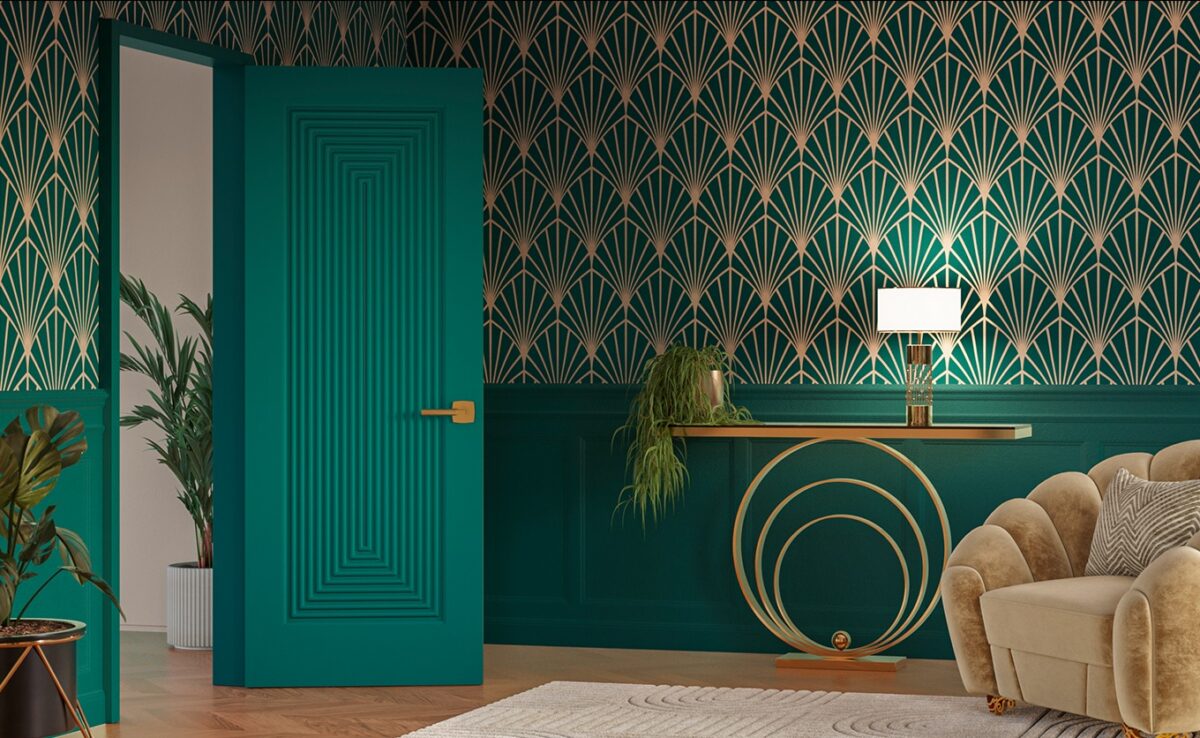
Most people don’t think much about interior doors until it’s time to replace them, and then the choices are wider than expected. They run from a basic slab on a home center shelf, around $65, to a made-to-order door that costs many times more. TruStile sits at the made-to-order end, and it’s fair to ask what that extra money buys.
Forshaw of St. Louis sells and installs TruStile doors, and this guide covers how they’re built, the styles and sizes, and what they cost, with Masonite and Jeld-Wen alongside for comparison.
TruStile doors are made-to-order interior and exterior doors built in Denver by a company Marvin has owned since 2015. Each panel door uses stile-and-rail construction in primed MDF or wood veneer over an MDF core, sized to your opening, with MDF doors made up to 48 by 120 inches. A primed MDF slab runs roughly $500 to $1,000 before installation, several times a stock Masonite or Jeld-Wen door. The extra buys custom sizes, a heavier swing and a crisper painted finish.
What TruStile Doors Are
TruStile is a door maker, not a store. TruStile Doors is based in Denver, Colorado, and Marvin, the window and door company, has owned it since 2015.
Every TruStile door is built for a specific order. In TruStile’s words: “We don’t carry any doors in stock so all sizes are built with the dimensions you provide.” You won’t find them on a home center shelf, because TruStile doors are sold only through dealer partners, who measure, quote and order for you.
The line covers interior doors in panel, glass, pocket and barn applications, plus exterior and entry door options. Forshaw sells TruStile doors for both interior and exterior openings, and we install the doors we sell. If you are also pricing exterior doors, our guide to Renewal by Andersen doors covers that brand’s cost and options.
How a TruStile Door Is Built
A TruStile door is built the way a cabinetmaker builds a frame: separate vertical stiles and horizontal rails joined around the panels. TruStile describes its MDF doors as “genuine stile and rail construction, never routed or stamped.” A molded door, by contrast, has its panel shapes pressed into the face rather than assembled.
Here’s what sits inside a TruStile MDF door, according to TruStile’s construction page:
- The core: laminated strand lumber, an engineered wood built for stability, with a poplar Wedge Edge where the hinges and lockset go for “superior rigidity, stability and screw-holding power.”
- The faces: “solid, super-refined MDF,” which TruStile says is denser than natural wood and gives better swing weight and sound control.
- The finish: every MDF door ships factory primed with a low-VOC primer, ready for your painter.
- The material: a minimum of 69% pre-consumer recycled wood content.
TruStile also says its MDF doors run 25 to 50% heavier than similar doors. You feel that when the door closes. It lands with a solid sound instead of a hollow one.
The wood options work differently. Stain-grade wood doors can be pre-finished in 11 stain options, and TruStile Reserve wood veneer doors ship hand sanded, ready to finish on site in the wood species you choose. MDF is the paint-grade choice. Wood is for a door you want to stain.
Styles, Sizes and Options
TruStile lists over 100 architecturally-correct panel designs in its TS Series, with one- to nine-panel configurations, and says the full catalog runs past 500 styles. Raised panels are, in TruStile’s words, “more traditional and have more dimension,” while flat panels suit “streamlined, modern design.” Between the two, the range covers architectural styles from a traditional colonial to a clean modern interior, including glass and pocket designs.
The options that matter most for a renovation project:
- Sizes: built to your dimensions, with MDF doors up to 48 by 120 inches, which suits tall and wide openings.
- Thicknesses: 1-3/8, 1-3/4 and 2-1/4 inches.
- Glass: glass inserts, the French Lite series and more than 25 glass types, according to TruStile.
- Applications: hinged, pocket and barn doors from the same design family.
- Fire ratings: 20, 45, 60 and 90 minute ratings are available on MDF construction.
Design trends point the same way. A 2026 industry survey of design professionals put flat-panel slab doors first, chosen by 54% of respondents. Retailer trend roundups add 8-foot doors in homes with tall ceilings, dark painted and black doors as an accent, ribbed and reeded glass to pass light between rooms, and pocket doors for tight spaces. A made-to-order door handles all of these without a custom shop.
What TruStile Doors Cost
TruStile publishes no price list. Dealers quote each door by size, material, panel style, glass and finish.
What moves the price: wood instead of MDF, a taller or wider door, a more elaborate panel style, glass, and stain finishes instead of primer. A primed MDF door in a standard size costs the least.
Installation is priced on its own. Forshaw quotes it opening by opening, on an itemized, written quote to take home.
TruStile versus Masonite versus Jeld-Wen
TruStile builds to order, through dealers, at a higher price. Masonite and Jeld-Wen sell mostly molded doors in standard sizes through retailers, at a fraction of the cost. Neither one is ours to sell, and each is the right door for plenty of rooms.
Here they are side by side, line by line.
| TruStile | Masonite | Jeld-Wen | |
| How it’s built | Stile-and-rail, MDF or wood | Mostly molded, plus MDF-series and stile-and-rail lines | Mostly molded wood composite, plus the stile-and-rail MODA collection |
| Core | Laminated strand lumber with a poplar Wedge Edge (MDF doors) | Hollow-core or solid-core | Hollow-core or ProCore solid core |
| Sizes | Made to order; MDF doors up to 48 by 120 inches | Mostly standard sizes from stock | Mostly standard sizes from stock |
| Finish | MDF factory primed; wood in 11 stains or sanded for site finish | Varies by line | Varies by line |
| How you buy it | Through a dealer, made to order | Retail stores, mostly from stock | Retail stores, mostly from stock |
Masonite and Jeld-Wen win on standard openings with a tight budget or a short schedule, where they’re hard to beat. Both make solid-core doors for rooms where quiet matters, and both carry stile-and-rail lines that narrow the gap with TruStile in look. Jeld-Wen’s MODA collection pairs stile-and-rail construction with its ProCore The Quiet Door core.
Where TruStile pulls ahead is the made-to-order part: custom sizes (MDF doors up to 48 by 120), a large style range, and a primed MDF surface built for paint. Price both for the same openings. If the quotes are far apart, check whether they’re pricing the same door. Often they’re pricing different jobs.
Fits When: Choosing the Right Door for Each Room
Most homes don’t need the same door in every opening. Here’s how we’d split it.
TruStile fits when:
- The opening isn’t standard. Tall doors in rooms with high ceilings, wide openings, or an older St. Louis home with openings that don’t match stock sizes.
- The painted finish will be seen. A primed MDF stile-and-rail door takes paint cleanly, and the panel profiles stay crisp.
- Weight and sound matter. Bedrooms, home offices and a room next to a busy kitchen, where a solid door closing quietly is the point.
- The house has a design plan. A renovation where doors, trim and glass are chosen as one look across the home.
Masonite or Jeld-Wen fits when:
- The opening is a stock size and the style you want is on the shelf.
- The room is a closet, pantry or utility space, where nobody will notice the door’s swing weight.
- Budget or schedule comes first, and a solid-core molded door covers the need.
When a room doesn’t need what TruStile adds, we say so. A TruStile door in the main rooms and a molded solid-core door on the closets is a sensible split.
What to Ask Before You Order
A made-to-order door is only as good as the dealer who measures, orders and installs it. These questions protect you:
- Lead time, in writing. TruStile doesn’t publish one, and it varies by order. Get the dealer’s date on paper before you plan the rest of the project around it.
- A sample door. See and swing the style and finish you’re ordering, not only a photo.
- Inspection on delivery. Ask that every door be checked for size, finish and damage when it arrives, before installation day.
- Jamb and hardware prep. Confirm whether you’re getting slabs or prehung units, the jamb depth for your walls, and the hinge and lockset bore.
- Warranty terms. Ask for TruStile’s warranty in writing, along with the dealer’s own terms on installation.
Ask Forshaw, or any dealer you’re pricing, for each of these before anything is built.
Frequently Asked Questions
Is TruStile owned by Marvin?
Yes. The Marvin Companies acquired 100% ownership of TruStile Doors, LLC on May 4, 2015, and said it would run TruStile as a separate business unit with no change in how TruStile serves its dealers. For you, that means a dealer like Forshaw can quote Marvin windows and exterior doors and TruStile interior doors from the same family of companies.
Are TruStile doors good quality?
On how they’re made, yes, and TruStile backs its doors with a limited lifetime warranty to the original owner. There are no independent lab tests that rank interior door brands against each other, so most comparisons online are dealer or roundup opinions. The real risk with any made-to-order door is lead time and fit, and both depend on the dealer, so the dealer you choose matters as much as the brand.
What is the most common interior door style?
The hinged panel door, most often a six-panel molded door, and in new-build homes it’s often hollow-core. TruStile makes the same panel look in stile-and-rail form, so you can keep a traditional six-panel style and change only how the door is built.
What’s the difference between a hollow-core and a solid-core door?
A hollow-core door has a light honeycomb or grid inside a thin skin, costs the least and lets more sound through. A solid-core door has a dense engineered core, so it blocks more sound and weighs far more. TruStile describes its doors as solid construction and doesn’t offer a hollow-core line.
See TruStile Doors in Person
The difference between these doors is easiest to judge with your hand on one. Visit Forshaw of St. Louis at our Frontenac showroom on South Lindbergh or our Ellisville showroom on Manchester Road, bring your measurements and your home center quote, and we’ll walk through the styles with you. You’ll leave with an itemized, written quote to take home, door by door.
Previous NextRELATED POSTS

Window Replacement in Town…
Town and Country is an evolving community—established ranches and split-levels on generous lots sitting alongside […]
Read More
Why Are Renewal by…
Updated for 2026 • Based on published industry data, BBB and consumer review aggregators, and […]
Read More
Choosing Mantels for Your…
Holiday Mantels As one enters a living room or bedroom, a fireplace immediately attracts attention […]
Read More