
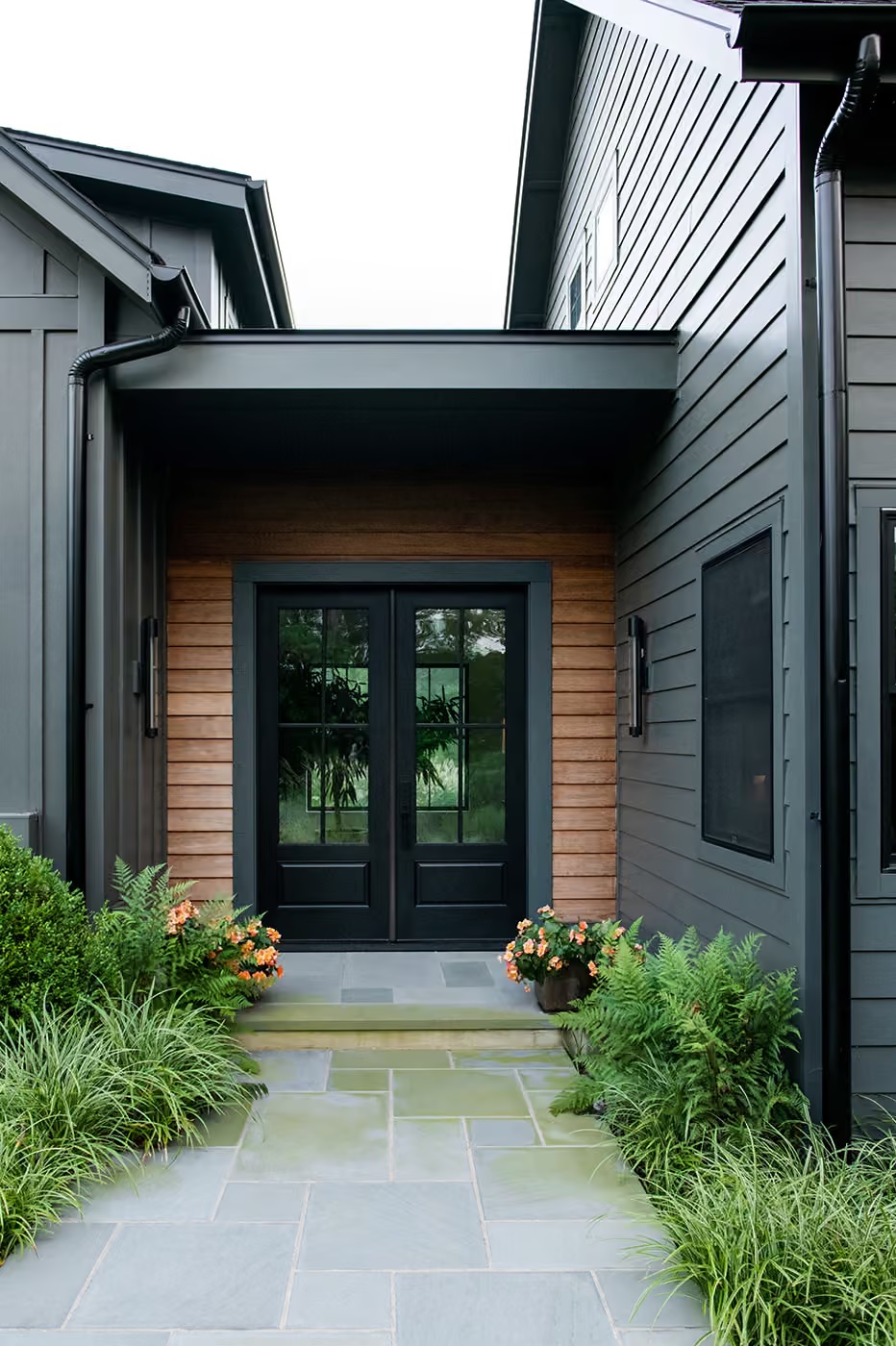
Your front door is the first thing people see and the part of the house you touch every day, so it’s worth getting right. Marvin builds its doors to order, which means your entry can be sized, glazed and finished for your exact opening, whether that calls for a wood TruStile door or an Ultimate or Elevate swinging door. That freedom raises one good question: which of them belongs on your house?
Here’s how the choices break down. Marvin will build almost any door in its catalog as an entry door, which leaves three real options for a front entry. TruStile, owned by Marvin since 2015, makes made-to-order wood entry doors. Ultimate pairs a wood interior with an aluminum exterior. Elevate pairs wood inside with Ultrex fiberglass outside.
Each one is quoted for your opening, so no price list can tell you what you’ll pay. The range is wide, from about $1,200 for a basic front door to past $30,000 at the top.
This guide helps you narrow it down before you ask for a quote. It covers which Marvin line suits your entry, how fiberglass and wood compare, what glass, sidelites and double doors add, what a new front door costs installed, and what to ask for in writing so you can compare one quote with another.
Forshaw of St. Louis sells and installs Marvin and TruStile doors, which gives us a stake in this question. Fiberglass, wood and the other door makers all get a fair word below. Where a detail isn’t settled, such as Elevate door sizes, we’ll tell you it’s a question for your quote.
Which Marvin Door Fits Your Front Entry
Whatever you choose, the door is built for your opening. Marvin describes its entry doors as “fully customizable,” in aluminum, fiberglass and wood, with glass panels, transoms and sidelites. Ultimate and Elevate are swinging door series rather than a separate entry line, and either one can be ordered as your front door.
| Door | Inside | Outside | Fits when |
| TruStile entry system | Wood | Wood | You want wood through and through, stained or painted |
| Marvin Ultimate swinging door | Wood | Extruded aluminum | The opening is large or tall, or you want French or narrow-profile doors |
| Marvin Elevate swinging door | Wood | Ultrex fiberglass | You want wood inside and fiberglass facing the weather |
Marvin also makes Essential, a door with Ultrex fiberglass inside and out. Whether we order Essential as an entry door isn’t confirmed, so ask before you plan around it.
Not every detail is settled for every line, so a few answers below come down to the quote for your opening.
Ultimate or Elevate for a Front Door
Pick Ultimate when the opening is big, tall or architecturally specific, and Elevate when you want a wood interior behind a fiberglass skin. Both give you wood on the inside of the house. The difference is what faces the street and how far the door can stretch.
Ultimate has an extruded aluminum exterior over a wood interior. It goes up to 14 feet wide and 10 feet high and works as an inswing or outswing door. It comes in narrow-profile and French door styles, including an arch-top French door. Marvin rates it up to PG50 for air, water and structural performance, offers options that meet ENERGY STAR V7 throughout the United States, and covers it under the Marvin Limited Warranty with a 20-year exterior finish warranty.
Ultimate fits when:
- The opening is oversized. A tall foyer or a wide double entry is where those 14 by 10 foot limits matter.
- The style is specific. French doors, arch tops and narrow profiles are all options.
- You want a factory finish outside. The aluminum exterior carries that 20-year finish warranty.
Elevate pairs a wood interior with an Ultrex fiberglass exterior, according to Marvin’s door brochure. We haven’t confirmed Elevate door sizes for this guide, so bring your measurements and we’ll check your opening against what Marvin will build. For both series, we confirm sidelites and transoms at the quote.
Elevate fits when:
- The opening is a standard single or double entry. Most front doors don’t need Ultimate’s size range.
- You want fiberglass on the weather side. It won’t warp or swell, like some entry door materials can.
- You still want wood inside. The interior can be finished to match the rest of your trim.
When a front door project doesn’t need what Ultimate adds, we say so and quote Elevate.
TruStile Wood Entry Doors
TruStile is the wood door maker Marvin bought in 2015, and every TruStile door is made to order. Its styles run from panel and modern doors to glass and specialty doors, for interiors and entries alike.
Two TruStile wood options suit an entry:
- Reserve is wood with natural stained finishes, for the grain you want to see.
- Resilient is paintable wood, for a front door in a color.
TruStile is the route for a door that’s wood on both faces. Ask for the wood species list and glass choices with your quote, since we don’t list them here. If you’re redoing interior doors as well, TruStile interior doors come from the same maker, which keeps the front door and hallway doors from one maker.
Fiberglass or Wood for a St. Louis Front Door
Fiberglass asks less of you over time, and wood gives the look most people picture on a traditional front door in exchange for upkeep. On Marvin doors the choice is often narrower than it sounds, because Ultimate and Elevate both keep wood inside.
Marvin’s buying guide frames it this way: wood “has a classic, timeless appeal,” fiberglass “won’t warp or swell, like some entry door materials can,” and fiberglass “offers greatly increased thermal performance over aluminum.” Aluminum, it adds, “is an energy conductor,” so aluminum doors “tend to be cold in the winter and hot in the summer.” That describes doors made of aluminum. On Ultimate, the aluminum is the exterior layer over a wood interior.
Independent buying guides land in the same place. Fiberglass resists warping, rotting and swelling and needs little maintenance. Wood needs the most upkeep and is the most exposed to moisture and sun unless it’s kept up. Steel is strong and usually costs least, but it dents and can rust where it’s scratched, and it isn’t one of the materials Marvin lists for entry doors.
On the doors we sell, the real decision looks like this:
- Wood throughout: a TruStile entry system, stained with Reserve or painted with Resilient.
- Wood inside, fiberglass outside: Marvin Elevate.
- Wood inside, aluminum outside: Marvin Ultimate.
Exposure matters too. A St. Louis front door facing south or west with no porch roof takes more sun and rain than one tucked under a deep porch, and that asks more of a wood exterior than of fiberglass or aluminum. A sheltered entry is a great help to a wood exterior.
Glass, Sidelites, Transoms and Double Entry Doors
Glass brings light into the entry, sidelites and transoms widen and raise it, and double doors double the opening. Each one adds to the price and changes how the door performs.
A sidelite is the narrow glass panel beside the door, and a transom is the glass above it. Tempered and laminated glass add safety, and low-E glass helps with heat control. For privacy, Ultimate offers decorative glass in frost, laminated, reed, obscure, sandblasted and tinted styles, and divided-lite patterns in rectangular, prairie, cottage, Victorian and trellis layouts.
More glass changes the energy rating. ENERGY STAR, the federal efficiency program, sets separate limits for swinging entry doors with no glass, with glass up to half the door, and with more than half, and it allows more heat loss as the glass grows. The rating covers the whole door, glass and frame included, not just the material on its face.
Double entry doors are common, and Marvin notes that “many farmhouse entry doors are double front doors.” Marvin and TruStile doors are made to order, so your opening sets the size rather than a stock chart.
Hardware and Finishes
Hardware is chosen with the door. On Ultimate, styles include Narrow Contemporary and Minimalist, in Matte Black, Satin Nickel PVD, Oil Rubbed Bronze PVD and Dark Bronze. PVD is a thin metal coating bonded on in a vacuum. For Elevate and TruStile, we confirm hardware choices and finishes door by door.
What a New Front Door Costs Installed
Front door cost guides disagree because they price different things. Some price the door alone: wood and fiberglass doors both run from a few hundred dollars to several thousand on their own. Some price labor alone, and a national home-improvement retailer’s guide lists door installation at roughly $400 to $1,000. Others price the full system, with frame, sill, threshold, trim and haul-away. If one quote includes the frame and threshold and the other doesn’t, they’re pricing different jobs.
A Marvin or TruStile door sits in the made-to-order part of that picture. Custom sizing, glass, sidelites and hardware are all chosen for your opening, and those choices move the price more than any single total can show. We don’t publish Forshaw door prices; we quote the door you choose for the opening you have.
What to Ask for in a Front Door Quote
A good front door replacement quote names every part of the job, so you can compare it line by line, whether it comes from us or another contractor. Ask for each of these in writing:
- The door: the maker and series, the material inside and out, the size and the swing.
- The glass: clear or decorative, tempered or laminated, and whether the door with that glass meets ENERGY STAR.
- Sidelites and transom: whether they’re included, and whether they’re new or reused.
- Hardware: the style, the finish, and whether a deadbolt is part of it.
- Frame, sill and threshold: replaced or kept, and how the opening is sealed and trimmed.
- Repairs: what happens if rot turns up when the old door comes out, and how it’s priced.
- Installation: who installs the door, since the quality of the fit decides how well it seals. We install the doors we sell.
- Warranty: the maker’s warranty and the installer’s, both in writing.
All of it belongs on an itemized, written quote to take home. If you’re also pricing another brand, such as Renewal by Andersen entry doors, hold its quote to the same list.
Frequently Asked Questions
Does Marvin make front doors?
Yes. If you’ve found a Marvin door you like in a brochure or on a neighbor’s house, bring a photo and ask for that design in your opening.
Who makes Marvin door hardware?
Marvin sells hardware under its own Marvin Gallery Hardware name and features Rocky Mountain Hardware on its hardware page, and its door brochure shows collections from other designer makers too. Marvin also says Ultimate hardware can be ordered with a different finish inside and out, which helps when your interior is satin nickel and you want dark bronze facing the street.
What are the most popular front doors?
One 2026 survey of home-improvement professionals found modern farmhouse (56%) and Craftsman (40%) leading front door styles, wood-grain finishes leading finishes (72%), and black leading painted colors (64%). Designers also point to deep green, navy and warm earth tones, and glass is moving toward three-quarter and full-lite doors with reeded or frosted glass for privacy. It’s one survey, so treat it as a sense of direction rather than a list of what to buy.
Start With the Opening You Have
Bring a photo of your entry and its rough measurements to our showroom in Frontenac on South Lindbergh or in Ellisville on Manchester Road. We’ll go through the Ultimate, Elevate and TruStile options that fit it, and measure the real opening before anything is ordered. If windows are on your list too, we sell Marvin windows in St. Louis, so your new front door and windows can be priced side by side.
Previous NextRELATED POSTS

Top 5 Summer Classics…
Summer classics teak outdoor furniture embodies elegance and durability, making it a popular choice for outdoor spaces. […]
Read More
Grilled Salad
Happy National Salad Month! Try this grilled salad for your next bbq or cookout! Salad: […]
Read More
Simple steps to care…
Simple steps to care for granite, marble and other natural stone Natural stone is one […]
Read More